
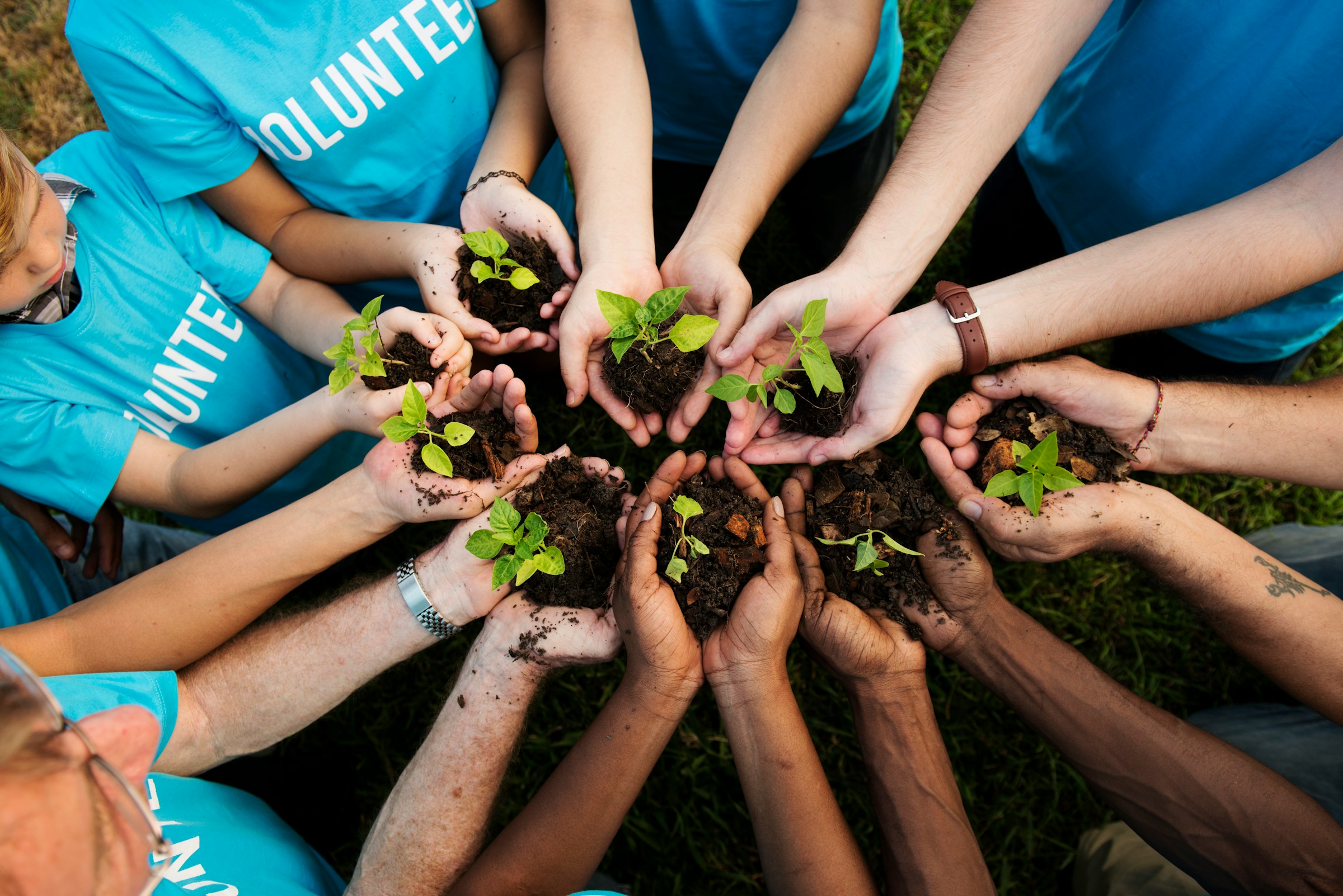
An NGO is a non-governmental organisation: a not-for-profit organisation that works independently of the government towards a social, humanitarian or scientific goal. Think of emergency aid, human rights, nature and the environment, or development cooperation. “NGO” is not a legal form: in the Netherlands, an NGO is usually a foundation (stichting), sometimes an association (vereniging).
This article explains what NGO means, what an NGO does, well-known examples, the difference from a charity, a stichting and an ANBI, and how to set up your own NGO in the Netherlands in 2026.
NGOs at a Glance
- Meaning: NGO stands for non-governmental organisation; in Dutch, niet-gouvernementele organisatie.
- Purpose: a social, humanitarian or scientific goal, without a profit motive.
- Independent: an NGO is not part of the government, but it can receive subsidies or work with governments.
- Legal form: usually a stichting, sometimes a vereniging. “NGO” itself is not a legal form.
- Name: no organisation’s permission is needed to use the name NGO.
- Funding: often donations, gifts, subsidies and volunteer work.
- ANBI: a separate tax status from the Belastingdienst, not automatic.
NGO Meaning: What Does NGO Stand For?
NGO stands for non-governmental organisation, in Dutch niet-gouvernementele organisatie. The term became known through the Charter of the United Nations of 1945: article 71 allows the UN Economic and Social Council to consult NGOs. Since then, the word has been used for organisations that are not set up or run by a government and do not seek profit.
In English it is usually written NGO, plural NGOs. In Dutch, the government writes it in lower case: ngo, plural ngo’s.
What Does an NGO Do?
An NGO helps with social problems (in Dutch) that need more support than the government or commercial organisations provide. An NGO often has one clear goal. Common fields are:
- emergency and humanitarian aid, for example food parcels after disasters;
- development cooperation and fighting poverty;
- human rights and help for refugees;
- nature, the environment and the climate;
- health and education.
An NGO can also be a partner in talks with governments, for example giving advice or mediating on the environment, child labour or working conditions abroad. International NGOs sometimes work with the United Nations. Many NGOs work with volunteers and with money from donors.
Examples of NGOs in the Netherlands
Well-known NGOs active in the Netherlands include:
- Greenpeace (nature and the environment);
- Doctors Without Borders, Artsen zonder Grenzen in Dutch (emergency medical aid);
- Oxfam Novib (fighting poverty);
- Stichting Vluchteling (help for refugees);
- UNICEF Nederland (children’s rights);
- Amnesty International (human rights).
Besides these large organisations, there are thousands of smaller NGOs, from a foundation that supports a school abroad to a local nature organisation.
NGO, Charity, Stichting and ANBI: What Is the Difference?
| Term | What it is |
|---|---|
| NGO | A collective name for not-for-profit organisations that pursue a social goal independently of the government. Not a legal form. |
| Charity (goed doel) | A description of the social or charitable purpose. Not a legal form either. |
| Stichting (foundation) | A legal form without members and without shareholders, set up at a notary. The usual legal form for an NGO. |
| Vereniging (association) | A legal form with at least two members, who decide together in the general meeting of members. |
| ANBI | A tax status from the Belastingdienst for a public benefit organisation (algemeen nut beogende instelling), with tax benefits for the organisation and its donors. |
| SBBI | A social interest organisation (sociaal belang behartigende instelling). This can apply to, for example, sports and hobby clubs, which are usually not an ANBI. Also a tax status, with fewer benefits than an ANBI. |
So an NGO can be a charity, have the legal form of a stichting and have ANBI status all at once, but it does not have to.
Which Legal Form Does an NGO Have?
Most Dutch NGOs are a stichting. A stichting has no members and no shareholders; a board uses the assets for the purpose set out in the articles of association. A stichting may make a profit, but that profit must go to its purpose and may not be paid out to the founders or board members. The government recommends the stichting as the legal form for an NGO. Read more in What Is a Stichting?
An NGO that relies on members can also be a vereniging. You set up an association with full legal capacity at a notary; without a notary, the association has limited legal capacity and its board members can more easily be personally liable. If you want to apply for subsidies, full legal capacity is often needed. An overview of all legal forms is in BV, NV and VOF in the Netherlands.
ANBI Status: Important for Donors
An NGO does not get ANBI status automatically. The organisation must apply for it to the Belastingdienst with the form “Aanvraag ANBI-beschikking”. An ANBI has benefits including:
- no gift or inheritance tax on gifts and inheritances that the organisation uses for the public benefit;
- donors may deduct their gifts from their income tax or corporate income tax;
- a refund of energy tax.
The main conditions (in Dutch) are:
- the organisation serves the public benefit with at least 90% of its activities (the 90% requirement) and has no profit motive;
- the organisation and the people directly involved in it meet the integrity requirements;
- no one may dispose of the assets as if they were their own, and the assets are limited to what is reasonably needed;
- board members and other policymakers receive no pay for that role other than reimbursement of their expenses and an attendance fee that is not excessive;
- there is an up-to-date policy plan, and the management costs are in reasonable proportion to the spending;
- money left after dissolution goes to another ANBI or a similar foreign organisation;
- the organisation keeps proper records and publishes certain information on a website.
Setting Up an NGO in Five Steps
- Goal and plan: decide which problem you want to solve, for whom and how. Make a plan covering the target group, the approach, the funding and the feasibility.
- Choose the legal form: usually a stichting; a vereniging if the NGO relies on members.
- Notary and articles of association: the notary draws up the deed of incorporation with the articles of association. These include the name with the word “stichting”, the purpose, the appointment and dismissal of board members, the registered office and what happens to the money after dissolution. If you want to become an ANBI, have the articles match the ANBI conditions from the start.
- Registration with KVK: the notary usually registers the stichting and its board members with the Chamber of Commerce (KVK). The ultimate beneficial owners (UBOs) are registered in the UBO register.
- Tax, ANBI and records: apply for ANBI status if needed, check whether the NGO must pay corporate income tax or VAT (usually only for commercial activities), open a business bank account and keep records from the start. You must keep them for seven years.
Costs: according to KVK, the notary costs between €500 and €1,000 for a stichting, and the administration between €600 and €1,800 a year. In addition, you pay a one-time €85.15 registration fee to KVK (2026).
Want to set up an NGO or charity? Read more about our support for setting up a stichting, NGO or charity.
How NetherBridge Partners Helps
We guide founders, board members and foreign organisations in setting up an NGO in the Netherlands: the choice between a stichting and a vereniging, the articles of association and the notary, registration with KVK and in the UBO register, preparing the ANBI application, and the bookkeeping and taxes afterwards. Contact us for a consultation.
The information in this article was checked in November 2026 with Ondernemersplein, KVK, the Belastingdienst and the Dutch Civil Code.
Frequently Asked Questions
What does NGO stand for?
NGO stands for non-governmental organisation, in Dutch niet-gouvernementele organisatie: a not-for-profit organisation that pursues a social goal independently of the government.
Is an NGO the same as a charity?
Not exactly. “Charity” describes the charitable or social purpose; “NGO” stresses that the organisation is independent of the government. Many organisations are both. Neither is a legal form.
Can an NGO make a profit?
Yes, but the profit must go to the organisation’s purpose. A stichting may not pay out profit to its founders or board members.
Is every NGO an ANBI?
No. ANBI is a tax status that the NGO must apply for itself at the Belastingdienst. Only if the NGO meets all the conditions does the Belastingdienst designate it as an ANBI.
Does an NGO get money from the government?
It can. An NGO is not part of the government, but it can receive subsidies, for example for sustainability, innovation or international cooperation. Many NGOs run mainly on donations and gifts.
Which legal form should I choose for an NGO?
Usually a stichting: suitable for an organisation without members and without a profit motive. If the NGO relies on members who take part in decisions, a vereniging can fit.


